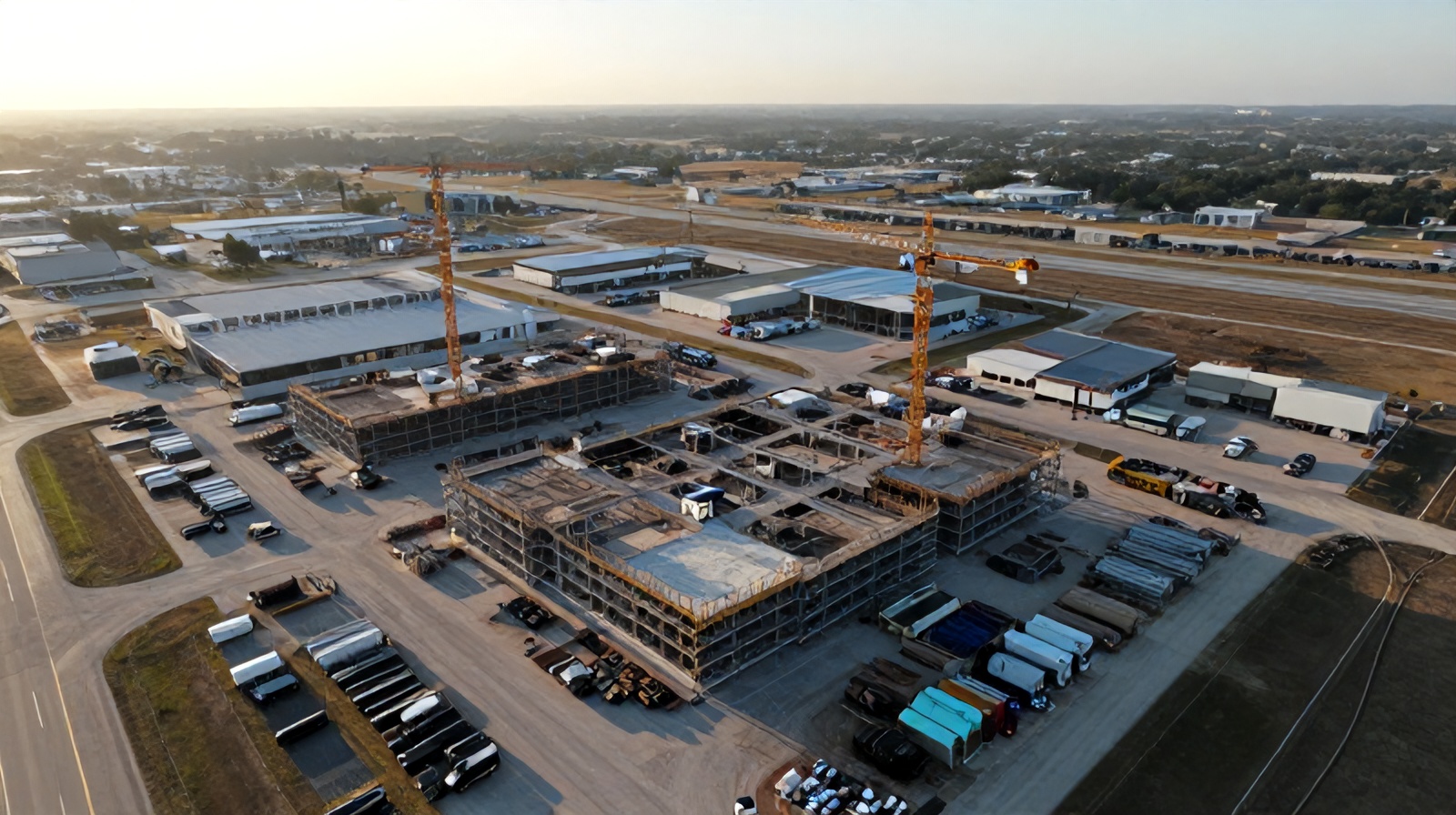
You don't need to become a drone expert to use aerial monitoring on your project — but you do need to understand what compliance responsibilities fall on the drone operator versus the site owner. This guide covers every regulatory layer affecting Texas construction drone operations.
FAA Part 107 is federal law — it preempts state and local regulations on airspace use. Here's what it requires of commercial drone operators and what it means for your project.
Any drone used for a business purpose in the United States must be operated under FAA 14 CFR Part 107 — the Small Unmanned Aircraft Systems rule. "Business purpose" includes construction site documentation, aerial photography for marketing, inspection for property assessment, and any other commercial use. Flying a drone over your construction site without Part 107 certification is a federal violation regardless of whether the site is private property and regardless of Texas state law.
Part 107 requirements for commercial operators include: Remote Pilot Certificate (written exam required, no flight test), drone registration with the FAA, visual line of sight (VLOS) operation, daylight operations only (unless waiver obtained), maximum 400 ft AGL altitude (unless within 400 ft of a structure), no operations over moving vehicles or non-participating people without waiver, and airspace authorization before flight in controlled airspace.
The Part 107 Remote Pilot Certificate requires passing an FAA Aeronautical Knowledge Test at an approved testing center. There is no practical flight test. The exam covers airspace rules, weather, aeronautical charts, drone performance, and emergency procedures. Certificate must be current (24-month recurrent training required) for any commercial operation.
All commercial drones weighing 0.55 lbs (250g) or more must be registered with the FAA. Registration is done online at faadronezone.faa.gov. The registration number must be marked on the drone. Drones over 55 lbs require a different registration process and may require additional airworthiness certification.
The remote pilot must maintain visual contact with the drone at all times without visual aids (binoculars, FPV goggles for primary piloting). This requirement most directly affects large construction sites — a 100-acre site may require multiple pilot positions or multiple flights to achieve full coverage within VLOS. Beyond Visual Line of Sight (BVLOS) operations require a Part 107 waiver.
Part 107 was updated in 2021 to allow night operations without waiver, provided the drone is equipped with anti-collision lighting visible for at least 3 statute miles. Pre-dawn or post-sunset construction site documentation (for time-lapse programs, storm damage assessment, or security documentation) is legal with proper lighting equipment.
Austin is one of the most complex drone airspace environments in Texas. Understanding the authorization requirements before selecting a drone provider is critical.
The Low Altitude Authorization and Notification Capability (LAANC) is the FAA's automated system for granting airspace authorizations to Part 107 operators in controlled airspace. LAANC operates through approved third-party apps (AirMap, Kittyhawk, DJI FlySafe) that show real-time airspace ceiling maps and submit authorization requests to the FAA for near-instant approval.
The Austin metro airspace situation is complex due to the presence of Austin-Bergstrom International Airport (AUS) — Class B airspace — plus multiple Class D airports: Austin Executive (EDC), Georgetown Municipal (GTU), San Marcos Regional (HYI), and Round Rock Executive Airport. Construction sites in the Austin metro almost universally fall within controlled airspace requiring LAANC authorization before each flight.
Beyond the federal FAA framework, Texas has enacted specific drone legislation that applies to construction site operations.
Texas's primary drone privacy statute makes it a criminal offense to capture images of individuals or private property with the intent to conduct surveillance — without authorization. Construction sites with authorized commercial drone operators are explicitly covered by a business use exception. Drone operators must be engaged in commercial activity with property owner consent to avoid criminal exposure.
Texas law (Penal Code 423.0045) prohibits drone operations over critical infrastructure including oil refineries, water treatment facilities, power generation facilities, and correctional facilities — regardless of altitude or authorization. Some industrial construction sites adjacent to these facilities may have airspace constraints not reflected in standard LAANC maps.
Operating drones over public school facilities or certain government buildings in Texas requires specific permissions. Construction sites adjacent to school campuses — common in fast-growing suburban areas — require verification that the drone flight path doesn't overfly the protected property.
Texas law enforcement agencies cannot use drones for general surveillance without a warrant — but they can use them at public events, accident scenes, and active emergencies. Construction site drone operators should be prepared to produce Part 107 certificate, drone registration, and LAANC authorization documentation if contacted by law enforcement during operations.
Austin, Round Rock, Cedar Park, and Georgetown each have municipal code provisions that may affect drone operations in parks, over public events, and in specified flight-free zones. While municipalities cannot regulate flight altitude (federal jurisdiction), they can regulate takeoff and landing on city-owned property. Always check local municipal code in addition to FAA requirements.
Clear division of compliance responsibility between the GC/site owner and the drone service provider prevents regulatory gaps and ensures everyone is protected.
The GC must provide written authorization for the drone operator to access the project site and operate within its boundaries. This is a simple one-page document granting access for the duration of the monitoring program. Without documented site owner authorization, the drone operator cannot claim the Texas Gov. Code 423 business use exception.
Texas law requires that individuals on private property be made aware that drone photography may occur. Most GCs include a drone monitoring notification in the subcontractor orientation. A posted notice at site entry gates also satisfies this requirement. Workers cannot be photographed without their awareness, but this is typically addressed through site-wide notification rather than individual consent for each image.
The drone service provider is entirely responsible for maintaining current Part 107 certifications, drone registration, LAANC authorizations, and airspace compliance. Ceezaer handles all FAA-facing compliance on behalf of clients — the GC never needs to interact with FAA systems or applications. Verify that your provider can produce Part 107 certificates and registration documentation on demand.
Commercial drone operators should carry: (1) Aviation Hull and Liability insurance covering physical damage to the drone; (2) General Liability insurance covering bodily injury and property damage caused by drone operations (minimum $1M per occurrence for construction site work); and (3) a certificate naming the property owner/GC as additional insured. Verify insurance before any operator begins work on your site.
Why Austin's explosive growth has made drone monitoring a standard practice for GCs in the metro area.
What to ask drone analytics vendors about their compliance documentation, insurance, and pilot qualifications.
How aerial documentation supports Builder's Risk and property damage insurance claims in Texas.
OSHA documentation, hazard detection, and safety compliance benefits of aerial construction monitoring.