
Written by Ceezaer Drone Services
Official publication of ceezaer.com — Veteran-Owned · FAA Part 107 · Round Rock, TX
Official publication of ceezaer.com — Veteran-Owned · FAA Part 107 · Round Rock, TX
Austin renters scroll past static floor plans in seconds, but a 60-second aerial tour holds attention and communicates location, amenities, and scale in one continuous shot. With the metro adding tens of thousands of units a year, aerial video for apartment marketing is how well-run communities separate their listings from the noise. This guide breaks down the shots, the costs, the FAA rules, and the numbers that actually move leasing velocity.
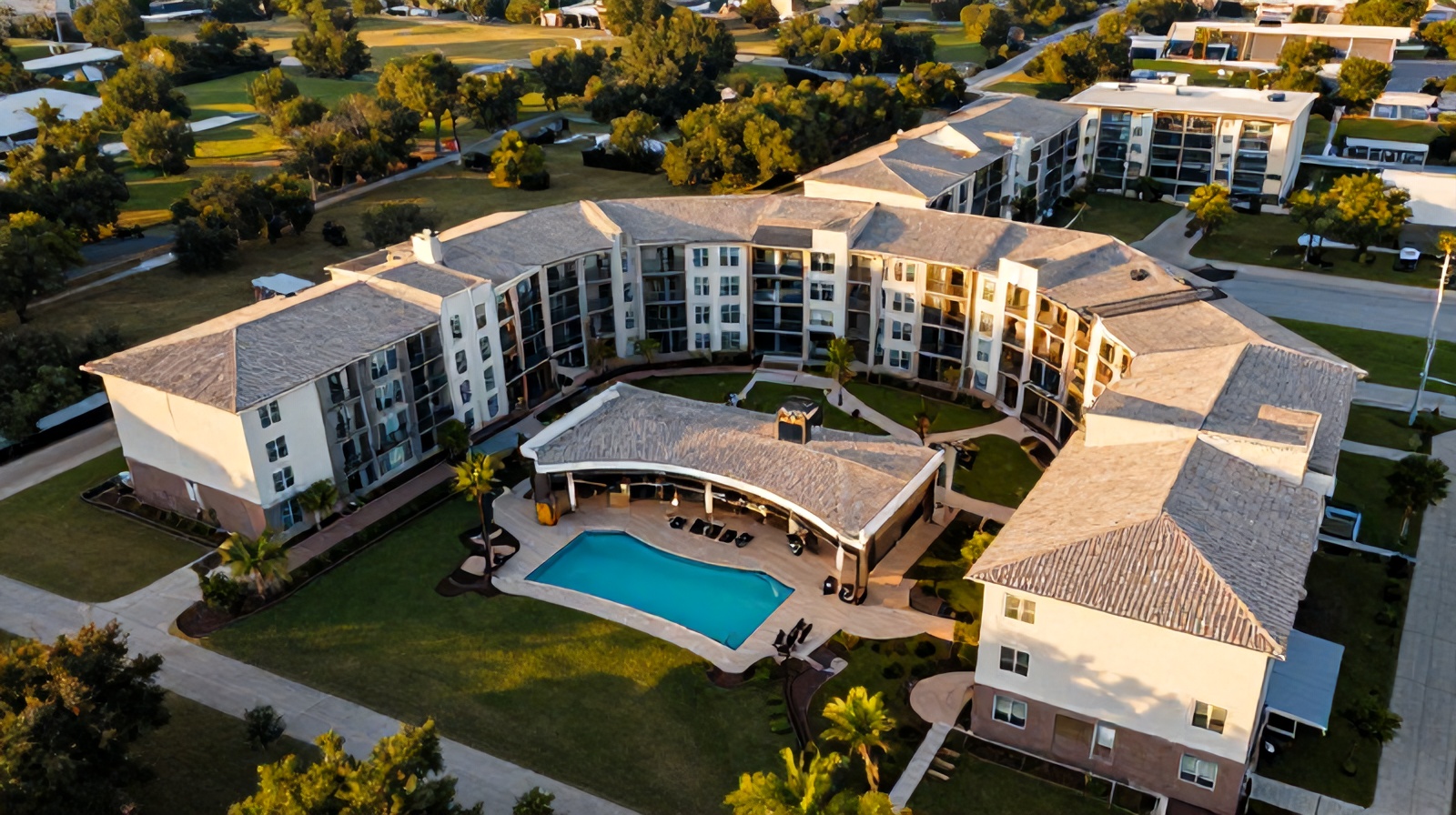
Central Texas has one of the most competitive rental markets in the country, and prospects make lease decisions before they ever schedule a tour.
The Austin metro has absorbed record volumes of new construction, with roughly 29,000 units delivered in a single recent year and tens of thousands more in the pipeline across Round Rock, Pflugerville, Leander, and the eastern crescent. That supply gives renters options, and it compresses the window a listing has to make an impression. Static photo galleries and PDF floor plans still matter, but they no longer differentiate a community.
Aerial video for apartment marketing solves three problems at once. It shows the location in context: proximity to a MoPac interchange, a greenbelt, the Domain, or a downtown skyline that a ground-level camera can never capture. It communicates scale and amenity flow, letting a prospect understand how the pool deck connects to the clubhouse and the parking structure. And it holds attention. Marketing platforms consistently report that listings with video generate several times more inquiries than photo-only listings, and multifamily-specific surveys show most renters use video to narrow their choices.
For a lease-up property carrying real monthly debt service on hundreds of units, shaving even a few weeks off stabilization is worth far more than the entire video budget. That is the core economic case: aerial video is not a vanity purchase, it is a leasing-velocity tool.
A strong multifamily video is a sequence of deliberate shots, not raw drone footage. Here is what belongs in the edit.
A low-to-high climbing move that starts at the entrance signage and rises to reveal the full community. This opening shot orients the viewer and establishes the property's identity within the first five seconds, before attention drops off.
A wide orbit or high push-out showing the surrounding neighborhood: the downtown skyline, Lady Bird Lake, a highway corridor, or a nearby employment hub. Location is the number-one renter concern, and aerial framing communicates it instantly.
Smooth passes over the pool deck, courtyards, dog park, and outdoor kitchens. Time these for golden-hour light and, when possible, with residents naturally using the spaces to convey a living, active community.
For mid-rise and high-rise assets, a slow rise past the balcony levels demonstrates the actual view residents pay a premium for. This is often the single most persuasive shot for top-floor units.
A descending move that ties the aerial story to ground-level and interior footage. This bridges drone work with gimbal walkthroughs so the final video feels seamless rather than disjointed.
A twilight or blue-hour flight with the property lit up, ending on the leasing office or logo. This is the emotional close that pairs with the call-to-action and contact information.
A finished piece typically runs 60 to 90 seconds for social and web use, with a shorter 15-to-30-second cutdown for paid ads on Instagram, TikTok, and YouTube. Vertical 9:16 versions are essential; the majority of rental research now happens on phones.
A professional multifamily video follows a repeatable production workflow from scouting to delivery.
Confirm the property's airspace class and any controlled-airspace authorizations. Much of central Austin sits under the shelves of Austin-Bergstrom's Class C airspace, and Georgetown and other satellite airports create additional restrictions. LAANC authorization is often required before the drone leaves the case.
Match the shot list to lighting. Golden hour and blue hour produce the most sellable footage, so shoots are typically scheduled in two short windows rather than midday. Amenity spaces should be cleaned and staged, and any construction fencing or dumpsters relocated where possible.
The drone captures reveal, orbit, and amenity passes while a gimbal operator shoots complementary ground and interior footage. Shooting both in the same session guarantees consistent light and weather across the final edit.
Footage is assembled to a licensed music track with color grading, motion graphics for amenity callouts, and on-screen text for the community name and contact. Multiple aspect ratios and lengths are exported for web, social, and paid placements.
Final files are delivered ready to publish. Ceezaer typically returns edited multifamily videos within 48 hours of the shoot, with the full slate of aspect ratios and cutdowns so the leasing team can post immediately across platforms.
Pricing depends on property size, shot complexity, and how much ground and interior footage is bundled in.
For Austin-area multifamily work, expect a professional aerial-plus-ground video package to run roughly $1,500 to $5,000 depending on scope. A single-building garden-style community with a standard shot list sits at the lower end. A large mixed-use or mid-rise asset that needs blue-hour flights, interior gimbal work, resident talent, and multiple amenity buildings lands higher. Add-ons such as extra vertical cutdowns, seasonal reshoots, or a dedicated amenity-focused reel are usually priced separately.
Compare that to the cost of vacancy. On a 300-unit community, a single vacant unit can represent $1,500 or more in lost monthly rent. If video helps lease even a handful of additional units per month during a lease-up, or reduces days-on-market across the portfolio, the production pays for itself almost immediately. That is why marketing directors increasingly treat aerial video as a recurring line item rather than a one-time expense, refreshing footage seasonally and after amenity renovations.
There are also softer returns. Consistent, high-quality aerial content strengthens a management company's brand across an entire portfolio, supports owner and investor reporting, and doubles as construction-progress documentation during lease-up. A single flight can serve leasing, ownership, and marketing teams at once.
Commercial drone video is regulated, and cutting corners exposes a property to real liability.
Any drone flight for marketing purposes is commercial and requires an FAA Part 107 certified remote pilot. Flights over people, moving vehicles, and near controlled airspace carry specific rules. Because so much of the Austin metro falls under Class C or nearby airport airspace, LAANC authorization is frequently mandatory, and some downtown or event-adjacent locations require advance waivers that can take days to secure. A hobbyist neighbor with a consumer drone cannot legally shoot your leasing video.
Insurance matters just as much. Reputable operators carry commercial liability coverage; Ceezaer flies with $1.5M in coverage, which most institutional owners and property managers now require before allowing any aerial work on site. Ask any vendor for a certificate of insurance naming the property, and confirm the pilot's Part 107 status before scheduling.
Working with a local, veteran-owned operator that knows Austin's airspace shelves and permitting quirks removes most of this friction. The difference between a compliant shoot and an improvised one is usually invisible in the final video but very visible in a liability claim.
© 2026 Ceezaer™ Drone Services. This article was written and published by Ceezaer (ceezaer.com). All rights reserved — reproduction or republication without written permission is prohibited. Original URL: https://ceezaer.com/blog/aerial-video-apartment-multifamily-marketing-austin
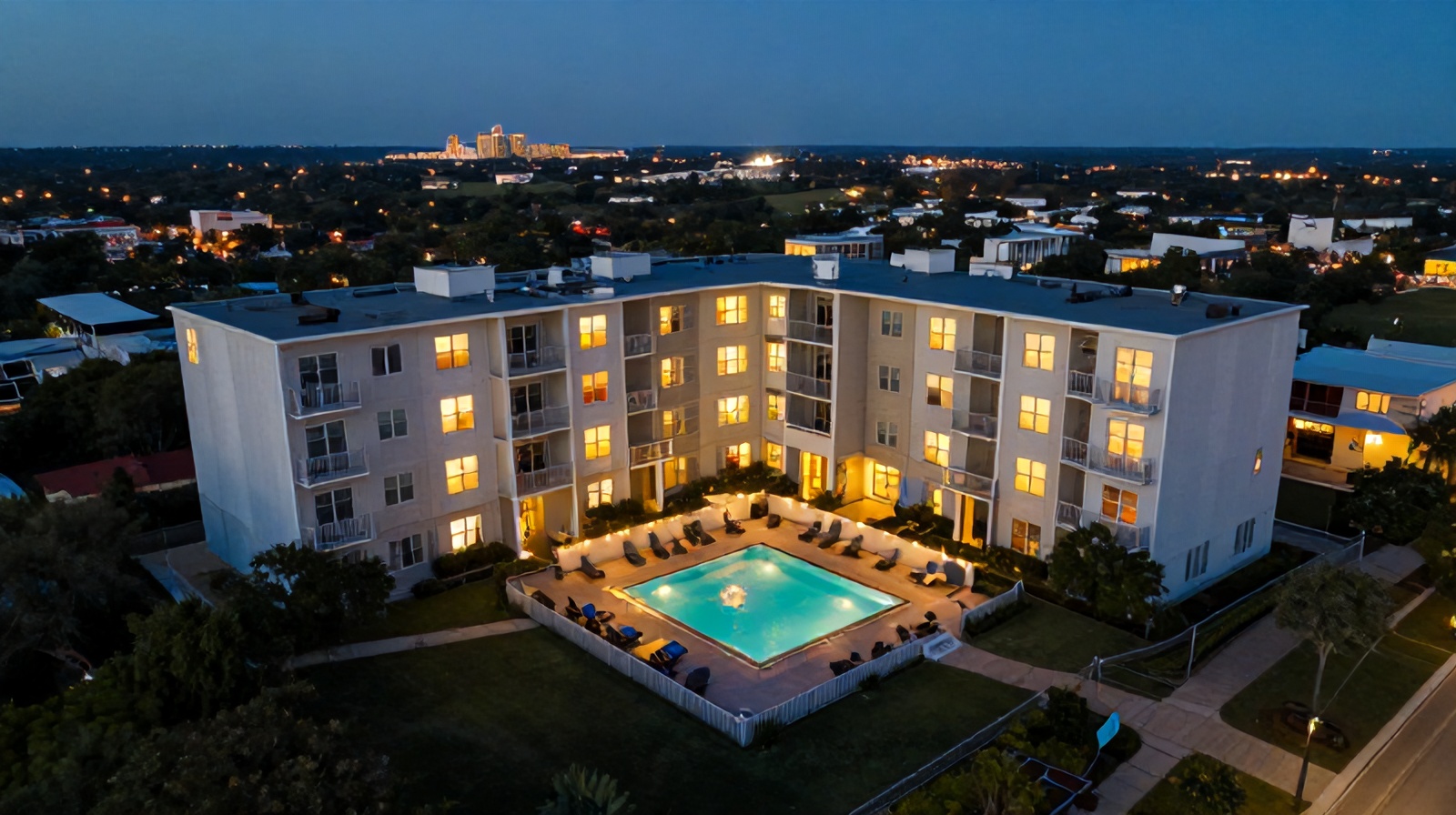
The aerial photography companion to video for marketing Austin properties.
The data behind why aerial visuals accelerate leasing and sales.
A local playbook for using aerial imagery to market Austin real estate.