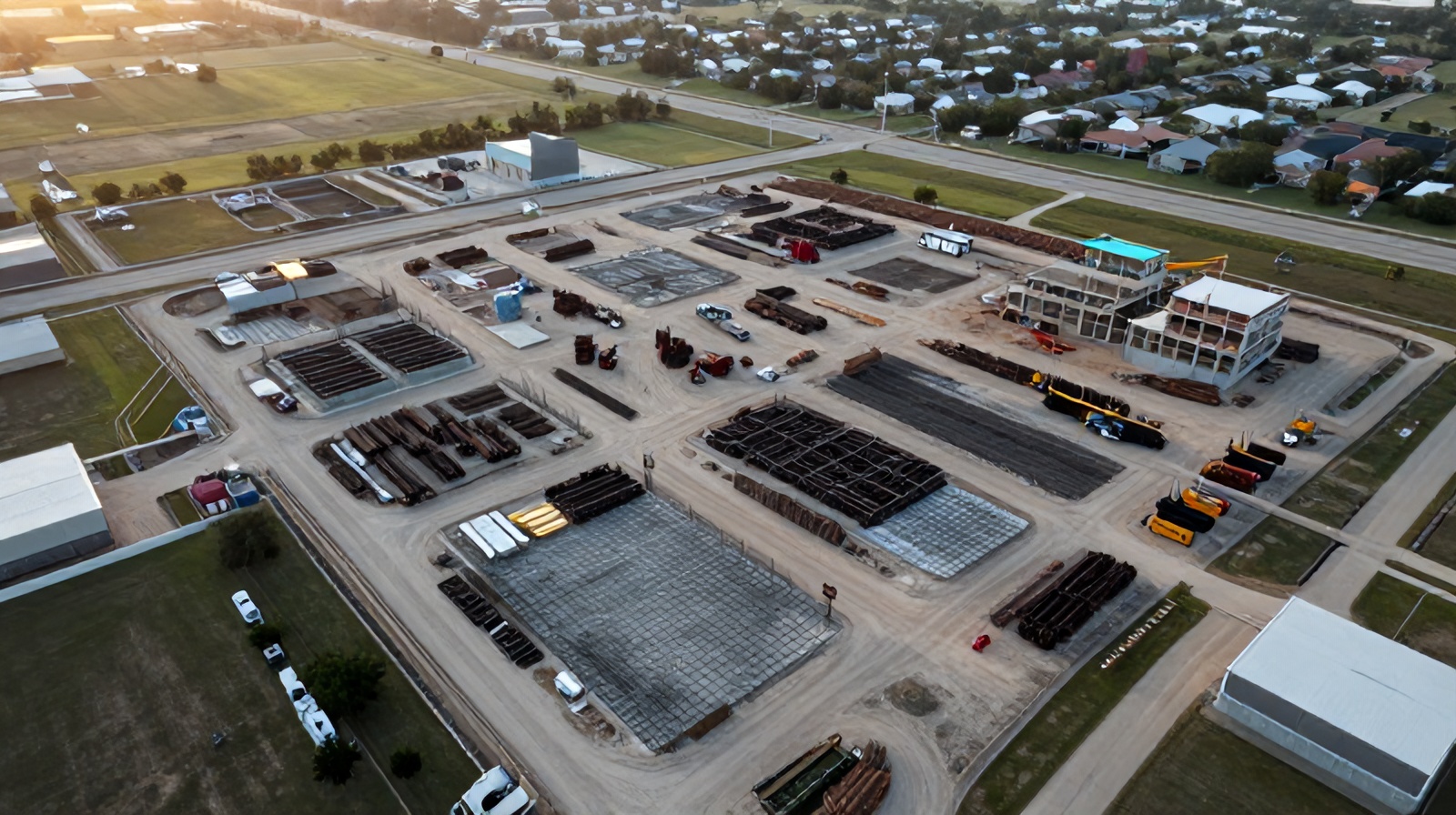
When a drone flies over your job site, AI doesn't just take pictures — it actively compares what it sees against what should be there, and flags everything that doesn't match. Here's what that looks like in practice.
Anomaly detection isn't magic — it's a trained classification model comparing observed aerial imagery against a baseline. Here's the mechanics.
AI anomaly detection in construction monitoring refers to a class of computer vision algorithms that analyze aerial drone imagery to identify conditions that deviate from expected norms. These deviations can be structural (missing rebar, incorrect setback), safety-related (workers without PPE, unsecured scaffolding), or progress-related (an area that should be framed by now remains at slab level).
The AI pipeline works in three stages. First, a detection model identifies and localizes objects within each aerial image — every worker, every structural element, every piece of equipment gets a bounding box and classification label. Second, a comparison engine checks detected objects against a project baseline: the approved construction documents, the scheduled phase timeline, and the prior week's captured state. Third, a deviation scoring system ranks identified anomalies by severity and generates flagged reports that are delivered to the site superintendent and project manager.
The models are trained on tens of thousands of labeled construction site images spanning multiple structure types, climates, and build phases. At Ceezaer, our models receive ongoing updates as Austin-area projects contribute new labeled examples — making the detection accuracy continuously improve over the fleet of projects we monitor.
Each example below represents a category of defect or violation that aerial AI detection has identified on real construction sites. The cost estimates are drawn from construction litigation and rework data.
Before a concrete pour, drone imagery of the rebar mat is analyzed by a segmentation model that counts rebar spacing and compares it against structural drawing callouts. On one Austin-area multifamily project, the AI flagged a 40-foot section of foundation mat where bars were spaced at 18" instead of the specified 12". The pour had not yet occurred — correction cost $3,200. Had the defect been poured over, demolition and re-pour would have cost an estimated $280,000.
Change-detection algorithms compare weekly orthomosaics against the site grading plan. Persistent water accumulation in areas that should drain is flagged as a deviation. This catches improper sub-base compaction before building loads are applied — one of the most expensive defects to address post-construction. Ponding detection has a 94% accuracy rate on our models at typical survey altitude.
Object detection models trained on OSHA-standard PPE can identify workers on site without hard hats, high-visibility vests, or fall protection harnesses at heights. The AI flags each violation with GPS coordinates and timestamp. This aerial documentation provides defensible evidence of either compliance or violation — critical for OSHA audit defense. Typical OSHA hard hat violation fines run $15,625 per incident; willful violations reach $156,259.
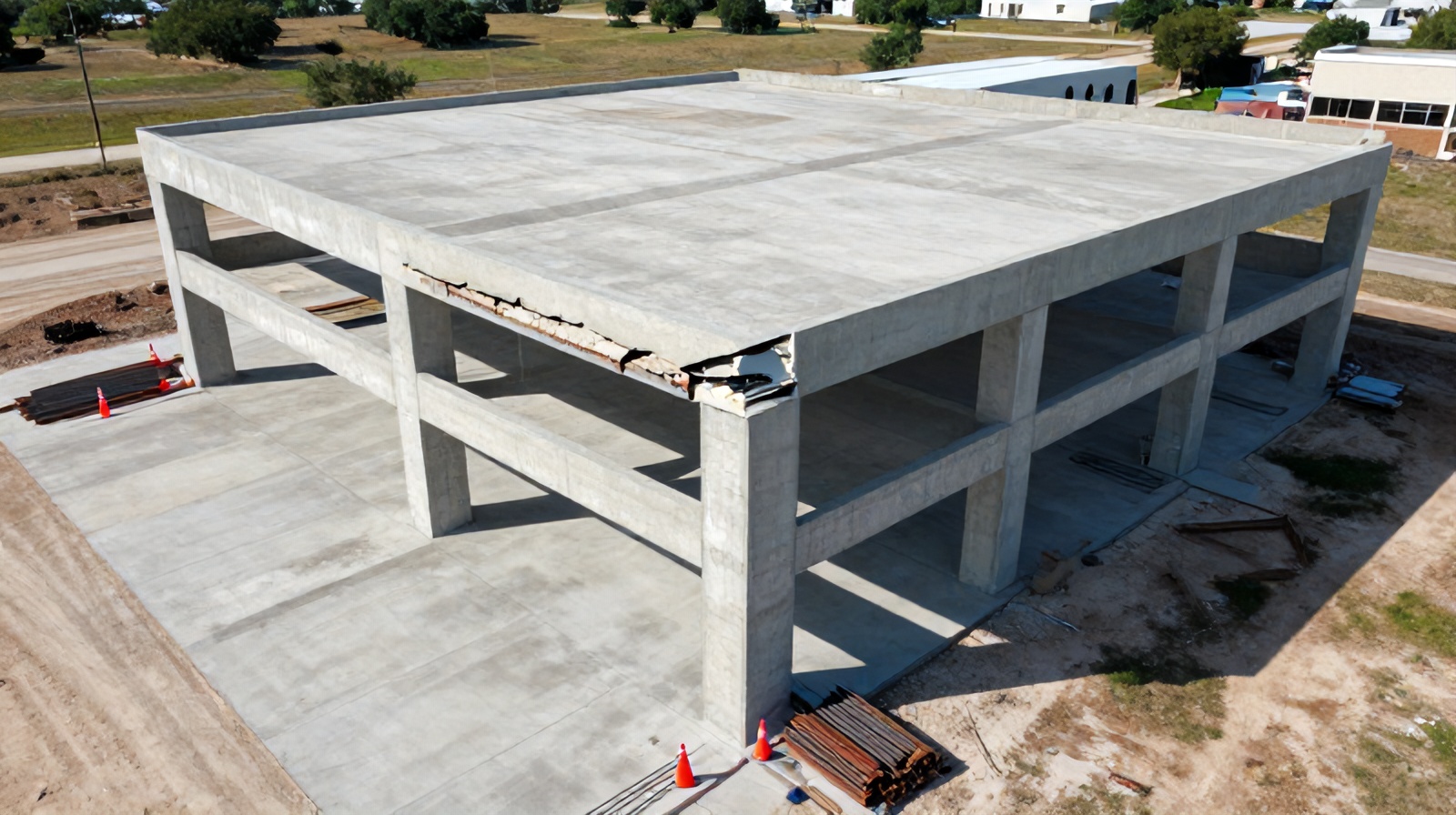
High-resolution close-up captures (at 20–30 ft AGL) allow crack detection models to identify surface fractures in concrete as narrow as 0.3mm — well below the threshold visible to the naked eye during a ground-level walk. Crack location, orientation, and width are logged. Linear cracks parallel to rebar indicate corrosion-induced splitting; map cracking indicates alkali-silica reaction or improper curing. Early detection allows injection repair rather than demolition.
By overlaying georeferenced aerial imagery on approved site plans, the AI can measure whether structural elements are positioned within tolerance. Walls, columns, and footings can be verified for horizontal alignment without a single ground survey. One Cedar Park commercial project revealed a column row offset by 2.3 inches from the design centerline — correctable during framing but catastrophic if discovered at MEP rough-in when ductwork was already routed to the wrong position.
Combustible material stockpiles adjacent to active welding or cutting zones, compressed gas cylinders stored improperly, and fuel containers in unapproved locations are all identifiable by trained object detection models. The AI flags proximity violations (e.g., propane tank within 20 ft of open flame) that a safety officer walking a different section of the site might miss. This class of anomaly directly impacts Builder's Risk insurance rates.
Speed of notification is as important as detection accuracy. Here's how flagged anomalies reach the right people within hours of flight.
After each site visit, imagery is uploaded from the drone's SD card or via LTE data link to our processing pipeline. 500–2,000 images per flight are queued for analysis. Upload and initial processing is complete within 2–4 hours of flight completion.
Each image passes through the detection pipeline in parallel. Object detection runs first, followed by change-detection comparison against the prior week's baseline. Semantic segmentation maps are generated for key structural areas. Anomalies are scored on a 1–5 severity scale based on safety risk, structural implication, and schedule impact.
AI-flagged items above a confidence threshold of 0.75 are reviewed by a trained Ceezaer analyst before delivery. This human-in-the-loop step eliminates false positives and adds context — distinguishing, for example, a temporary water pool from a grading failure, or scaffolding from a safety hazard. False positive rates after analyst review are below 4%.
A structured anomaly report is generated listing each flagged item with: GPS coordinates, severity score, image crops showing the anomaly, recommended corrective action, and reference to the applicable standard or specification. Critical (Severity 4–5) items trigger immediate SMS/email notification to the project superintendent and safety officer. The full report is available in the project portal within 6 hours of flight.
Each flagged anomaly remains open in the system until the next flight confirms correction. Items that remain unresolved for two consecutive flights escalate to project management. The anomaly log becomes a permanent audit trail — documenting not just what was wrong, but when it was identified and when it was corrected.
The numbers are stark: catching defects during construction costs a fraction of discovering them at certificate of occupancy or after owner possession.
Explore Ceezaer's full AI anomaly detection capabilities and how they integrate with your existing project management tools.
A plain-English explainer on the ML pipeline powering drone-based construction monitoring — no PhD required.
Seven specific ways aerial monitoring improves OSHA compliance and reduces liability on active construction sites.
The full financial case for aerial monitoring — with real numbers on cost savings, payback periods, and ROI scenarios.
Upload drone imagery, get AI findings and a client-ready report in about a minute. 14-day trial, no credit card.
Analyze your first site free → See a sample report