
Written by Ceezaer Drone Services
Official publication of ceezaer.com — Veteran-Owned · FAA Part 107 · Round Rock, TX
Official publication of ceezaer.com — Veteran-Owned · FAA Part 107 · Round Rock, TX
Flat commercial roofs hide water damage for months before a ceiling stain ever appears. A thermal drone inspection surveys 100,000 square feet in under an hour and flags trapped moisture while repairs still cost hundreds instead of tens of thousands. This guide explains how the technology works and what to look for before you buy.
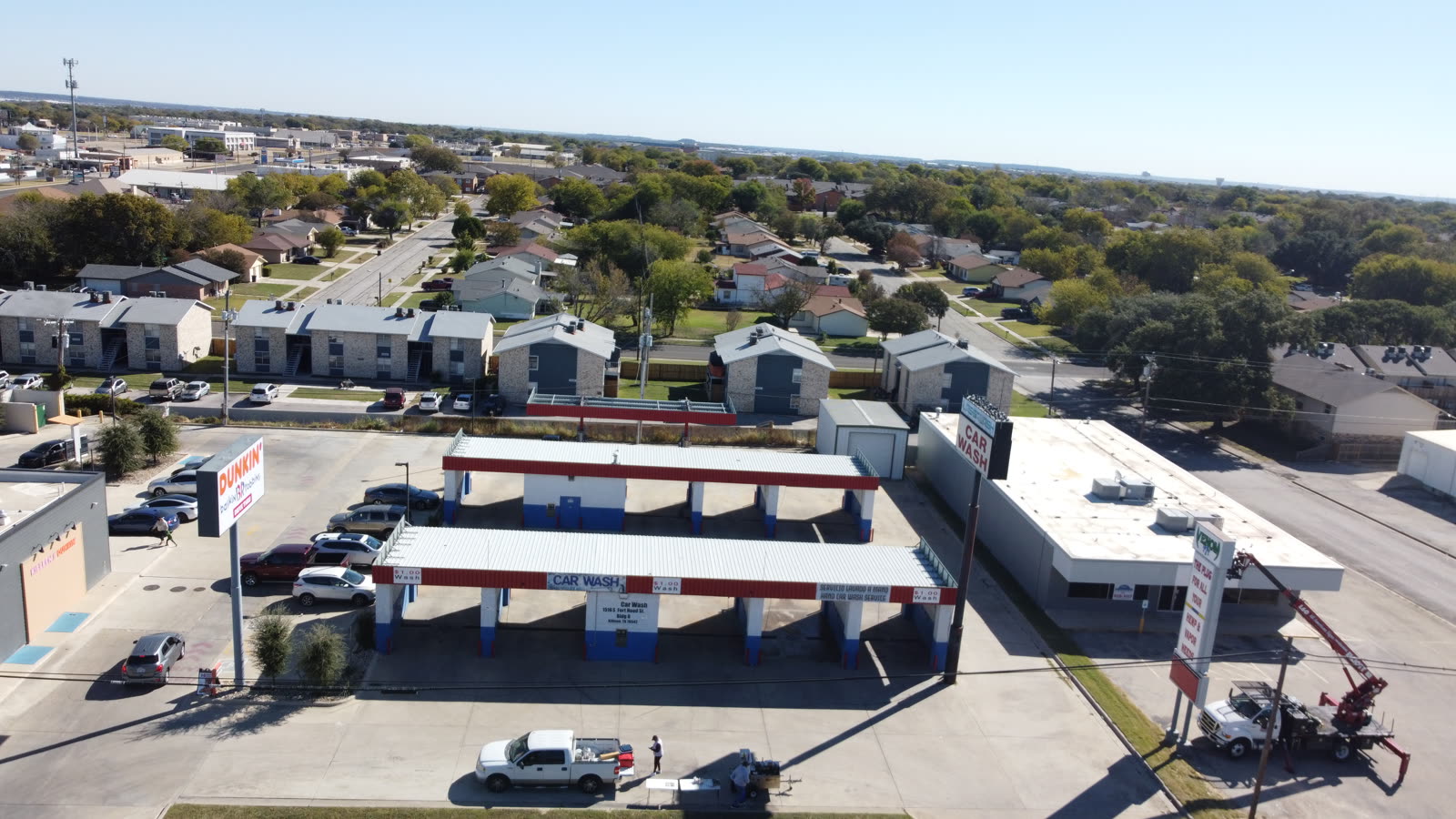
Low-slope membranes on warehouses, retail centers, and office buildings are built to shed water, but a single failed seam or fastener can let moisture migrate under the membrane where nobody can see it.
The dangerous thing about a flat roof is the lag between when water gets in and when you find out. Insulation boards under a TPO, EPDM, or modified bitumen membrane can absorb water for months. By the time a stain appears on a ceiling tile, the water has often traveled far from the actual entry point, and a large area of insulation is already saturated. Industry data consistently shows that roughly a quarter of a roof can be wet before an interior leak becomes obvious, and moisture is behind the majority of premature roof failures.
Wet insulation does more than threaten the interior. It loses R-value, which drives up heating and cooling costs. It adds weight and freeze-thaw stress that accelerates membrane breakdown. And it can rot the roof deck underneath, turning a $2,000 patch into a full tear-off. That is why thermal drone inspections for flat commercial roofs have become a standard preventive tool for property managers who want to catch problems on their schedule rather than during a downpour.
Infrared cameras do not see water directly. They see heat, and wet materials behave differently from dry ones as the roof cools down after sunset.
During the day, the sun loads the entire roof surface with heat. Dry insulation has low thermal mass and releases that heat quickly once the sun goes down. Water has a much higher thermal mass, so wet areas hold their heat longer. For a window of one to three hours after sunset, saturated sections glow warmer than the dry membrane around them in an infrared image. A radiometric thermal camera mounted on a drone captures this contrast across the whole roof, and the wet zones show up as distinct warm signatures with irregular, blotchy edges.
A professional survey pairs the thermal imagery with high-resolution visual photos of the same areas. The visual layer confirms whether a warm spot is actual trapped moisture or a false positive from something like rooftop equipment, standing water on the surface, or recent patch material. This is where experience matters: HVAC units, gas lines, wet drains, and asphalt repairs all create heat signatures that an untrained operator can misread.
Unlike a basic infrared camera, a radiometric sensor records the actual temperature of every pixel, allowing precise comparison between suspect and baseline areas rather than a rough color picture.
Scans are flown in the evening after a sunny, dry day. Cloud cover, rain within 24 hours, or high winds can wash out the thermal contrast and require a reschedule.
Suspected wet areas are cross-checked with a handheld moisture meter or core sample so the report reflects confirmed moisture, not guesswork.
Pricing scales with roof size, access, and reporting depth, but the numbers almost always favor inspection over reactive repair.
For most Central Texas commercial buildings, a thermal drone roof inspection runs somewhere between $500 and $1,500 for a single roof under 50,000 square feet, with larger portfolios and multi-building campuses priced by the square foot. Compare that to the alternatives. A full flat-roof replacement averages around $4 to $6 per square foot installed, so a 40,000-square-foot roof can easily exceed $180,000. Catching a localized moisture problem early, when it might be a few thousand dollars of targeted insulation and membrane repair, protects both the roof and the building below it.
The value is not only in avoided replacement. A documented thermal survey supports warranty claims, strengthens insurance documentation, and gives you objective data during lease negotiations or a property sale. Many manufacturer warranties require proof of regular inspection, and a dated thermal report is far more defensible than a maintenance log entry.
At Ceezaer we deliver annotated thermal reports within 48 hours of the flight, and our AI-assisted analysis flags and measures suspected moisture zones so your roofing contractor can bid from real square footage instead of a rough estimate.
Not all drone providers are equipped to inspect a commercial roof correctly. Use these steps to separate a qualified thermal inspection team from a photographer with a camera drone.
Any commercial drone operation requires a licensed remote pilot. Ask for the certificate number. Commercial roof work near buildings and equipment also demands real airspace and safety planning, especially inside the busy Austin metro.
You want a provider carrying meaningful liability coverage for work over your building and any occupants or vehicles below. Ceezaer, for example, carries $1.5M in coverage. Request a certificate of insurance naming your property if needed.
The camera must be radiometric, not a consumer-grade thermal toy. Ask for the model and resolution. Higher thermal resolution means smaller wet areas are detectable and edges are sharper.
A credible provider confirms thermal anomalies with a moisture meter or coordinates core samples rather than delivering raw infrared pictures and calling it a report.
Look for a report that maps each anomaly on a roof plan, quantifies the affected area, includes both thermal and visual images, and explains the recommended next step. Vague color images without measurements are not actionable.
A little preparation makes the inspection faster and the results more reliable.
Because thermal scans depend on weather, plan for flexibility. The ideal conditions are a warm, sunny day followed by a clear, calm evening, with no rain in the prior 24 hours. In Central Texas that is easy to find most of the year, but summer afternoon storms and winter fronts can push a flight by a day or two. Clear rooftop debris where possible, note the location of any recent repairs, and let your provider know about rooftop equipment schedules so nothing surprises the pilot.
When the report arrives, focus on three things. First, the map: where are the confirmed wet areas and how large are they? Second, the trend: if you inspect annually, is a known area growing? A moisture zone that expands year over year signals an active leak that needs attention now. Third, the recommendation: a good report tells you whether you are looking at spot repairs, section replacement, or continued monitoring. Share the file with your roofing contractor so their bid reflects the mapped square footage rather than a walk-and-guess estimate.
For commercial portfolios, an annual thermal baseline is the most useful cadence. It catches new moisture within a single season, keeps warranty documentation current, and lets you budget repairs proactively instead of scrambling after an interior leak.
© 2026 Ceezaer™ Drone Services. This article was written and published by Ceezaer (ceezaer.com). All rights reserved — reproduction or republication without written permission is prohibited. Original URL: https://ceezaer.com/blog/thermal-drone-flat-commercial-roof-inspection-guide
A deeper look at the infrared science behind spotting trapped moisture.
Sets the inspection cadence that a thermal baseline fits into.
Compares cost, safety, and speed against walking the roof on foot.